
Guilford County Warrant Access
Guilford County warrant records are not held in one single public list. The research source identifies four practical channels: magistrate criminal and warrant offices, the Guilford County Sheriff's Office Legal Process Division, the Sheriff's Police To Citizen wanted-person routes, and court records after a criminal case reaches the Clerk of Superior Court. North Carolina magistrates are District Court officers. They issue arrest warrants, conduct initial appearances, and set release conditions. The Sheriff's Office then serves arrest warrants, arrest orders, criminal summonses, fugitive-from-justice process, child support orders, subpoenas, and other criminal process required for service in Guilford County.
The official Guilford County court contact directory lists separate magistrate contacts for Greensboro criminal/warrant matters and High Point. The Sheriff's services page tells people who need to be served with criminal process to respond to the Greensboro or High Point Magistrate's Office or contact the Warrant Squad or Staff Duty. That direct confirmation matters because a web result may lag behind service, recall, bond changes, or court disposition.
The Guilford County Sheriff's services page describes the criminal process handled by the agency.
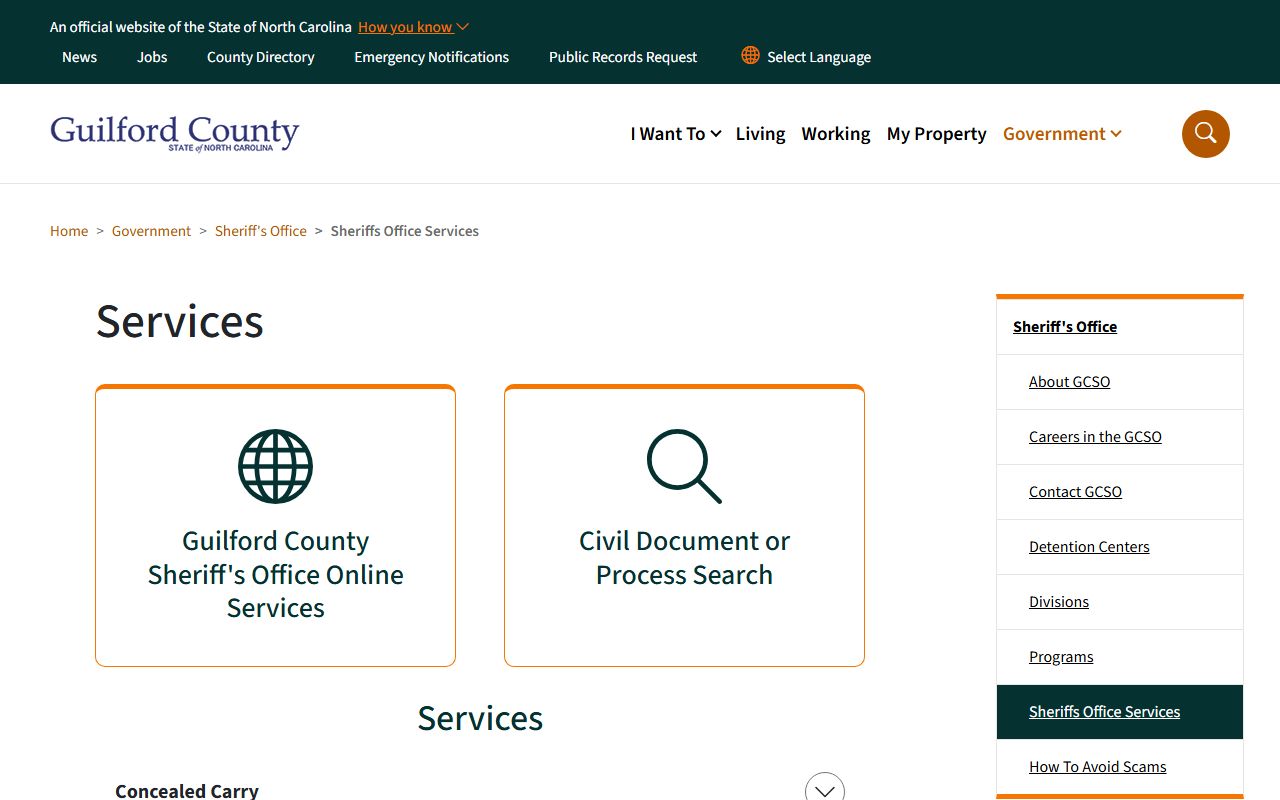
That source supports the warrant page's split between sheriff service, magistrate response, and later court-record tracking.
Types of Guilford County Warrants
Different warrant terms point to different stages of a case. An arrest warrant starts with a judicial officer's finding that a person should be brought before the court. A bench warrant or order for arrest often follows a missed court date, a failure to comply with release terms, or a failure to pay after disposition. A search warrant authorizes a search rather than an arrest, so it may not appear in a wanted-person search. Criminal summonses and child support orders can also be served by the sheriff even though they are not the same as an active arrest warrant.
- Arrest warrant - issued through a court officer, commonly a magistrate, to bring a person before the court.
- Bench warrant or order for arrest - often tied to failure to appear, failure to comply, or post-disposition payment issues.
- Search warrant - authorizes a place, item, or data search and is not a wanted-person listing.
- Criminal summons - served by the sheriff but usually directs a court appearance without immediate arrest.
- Fugitive process - used when another jurisdiction seeks custody or return of a person.
Search Guilford County Warrant Records
Official P2C wanted-person routes exist for wanted persons and most wanted persons. The Police To Citizen application is JavaScript-rendered, and the research did not capture a plain static active-warrant list. Use the online wanted-person search to look for a lead by name or warrant number, then call the correct warrant office, magistrate, or Staff Duty line before relying on the result. If a criminal case has been filed, the NC eCourts Portal can help track the case record, hearings, charges, and disposition.
- Open the Sheriff's P2C wanted-person route and search by name or warrant number if known.
- Review whether the result gives a warrant number, agency, charge, bond, or address information.
- Call the Greensboro or High Point warrant office, magistrate, or Staff Duty to confirm current status.
- After a court case is filed, use NC eCourts Portal or the Clerk of Superior Court to follow hearings and case disposition.
The P2C wanted-person catalog is the official web route identified for wanted-person searches.
The online route is useful for starting a warrant search, but the research supports direct confirmation with the warrant office.
Guilford County Warrant Search Fields
The P2C wanted-person field inventory shows person, address, and warrant-number fields. The available text does not prove which fields are required, so required status should be treated as unspecified. Last name and warrant number are the most useful starting points when known. Address fields can help distinguish people with similar names, but a direct office check is still needed before taking action.
| Field Label | Type | Required | Notes |
|---|---|---|---|
| First Name | Text | Unspecified | Person-search field in P2C. |
| Middle Name | Text | Unspecified | Helps narrow common names. |
| Last Name | Text | Unspecified | Sort uses last name in the app structure. |
| Street Number | Text | Unspecified | Address component if configured. |
| Street Name | Text | Unspecified | Address component if configured. |
| Warrant Number | Text | Unspecified | Search or display field; sorting by warrant number was observed. |
| Search text | Text | Unspecified | Simple search workflow. |
What Guilford County Warrants Show
A P2C wanted-person result may show enough detail to identify a possible match, but it is not the same as a complete criminal case file. The captured fields include name, address fields, warrant number, agency name, charge information if not hidden, warrant type if not hidden, bond amount if displayed, and most-wanted image or reference fields. If charges later reach court, the case file in Portal and the Clerk's office can show case number, court dates, disposition, sentence, fines, costs, and other case events.
| Field | What It Shows |
|---|---|
| Full name | Person tied to the wanted-person entry. |
| Address fields | Street or full address data if configured for public display. |
| Warrant number | Identifier that can help the warrant office locate the process. |
| Warrant type | Type of process, if not hidden in the public display. |
| Warrant charge | Charge text when the P2C configuration displays it. |
| Bond amount | Bond information if available and current. |
| Agency name | Law enforcement agency associated with the entry. |
The P2C most-wanted route is separate from the general wanted-person catalog.
Most-wanted listings can show public-facing reference details, but they still need office confirmation for warrant status.
Resolve Guilford County Warrants
An outstanding warrant should be handled through the office named in the official sources. The research says to call the appropriate warrant office or magistrate, confirm whether bond is set, ask whether self-surrender is required, and contact counsel if represented. A person instructed to appear should follow the warrant office or magistrate instructions and keep receipts, release papers, or court notices. After the warrant is served or cleared, Portal or the Clerk can be used to track the court case, but the web docket may not update at the same moment as the sheriff or magistrate system.
Important: Call the warrant office or magistrate before appearing so bond, surrender location, and case status can be confirmed.
| Channel | Details |
|---|---|
| Greensboro Warrant Office | 201 S. Edgeworth St., Greensboro, NC 27401; Monday-Friday 8 a.m.-5 p.m.; 336-641-2727. |
| Greensboro Magistrate or after hours | 201 S. Edgeworth St.; Staff Duty 336-641-3355. |
| High Point Warrant Office | 507 E. Green Drive, High Point, NC 27260; Monday-Friday 8 a.m.-5 p.m.; 336-641-7907. |
| High Point Magistrate or after hours | 505 E. Green Drive; Staff Duty 336-641-3355. |
| Legal Process Division | Greensboro Room 103LE at 201 S. Eugene St., 336-641-3735; High Point 507 E. Green Drive, 336-641-7907. |
Sheriff Legal Process Division
The Sheriff's Legal Process Division is the local service point for criminal process and civil process information. Greensboro service contacts and High Point service contacts differ, which is important because Guilford County has both Greensboro and High Point court and detention facilities. The Legal Process Division page identifies the Warrant Squad, Civil Process Section, Records Section, addresses, and phone numbers. Civil process lookup is also available, but it is not a criminal warrant database.
The Sheriff Legal Process Division page gives the office context behind warrant service.
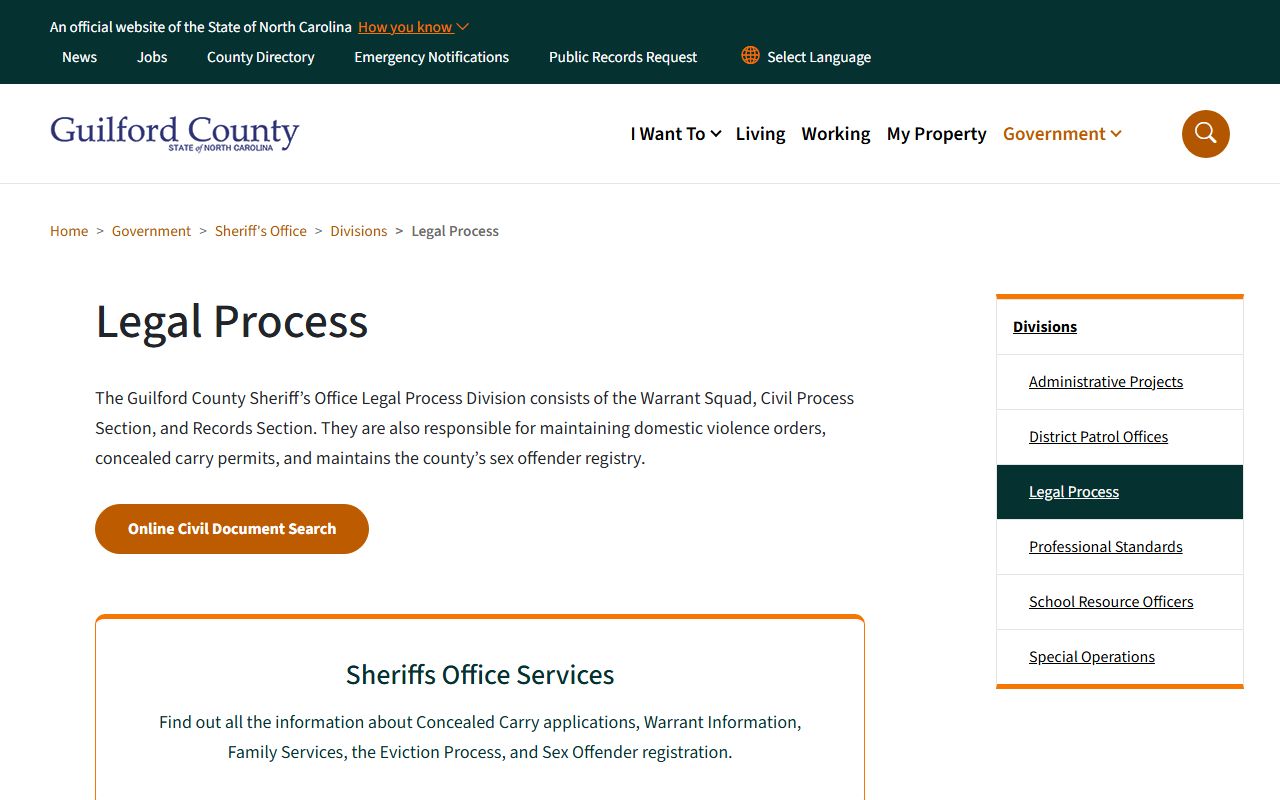
That division detail helps separate warrant service from court case lookup and county public-record requests.
Limits on Guilford County Warrants
Not every warrant-related record is public online. Search warrants, juvenile matters, sealed records, and active law enforcement investigation records may be restricted. North Carolina law treats filed court records and law enforcement investigative records differently. Court records are generally open through the Clerk unless a law or order restricts them, while criminal investigative records have special limits. Federal warrants and federal criminal process are separate from Guilford County District Court and Superior Court and should not be searched as local sheriff warrants.
The Sheriff civil process lookup is useful for service status, not for confirming an arrest warrant.
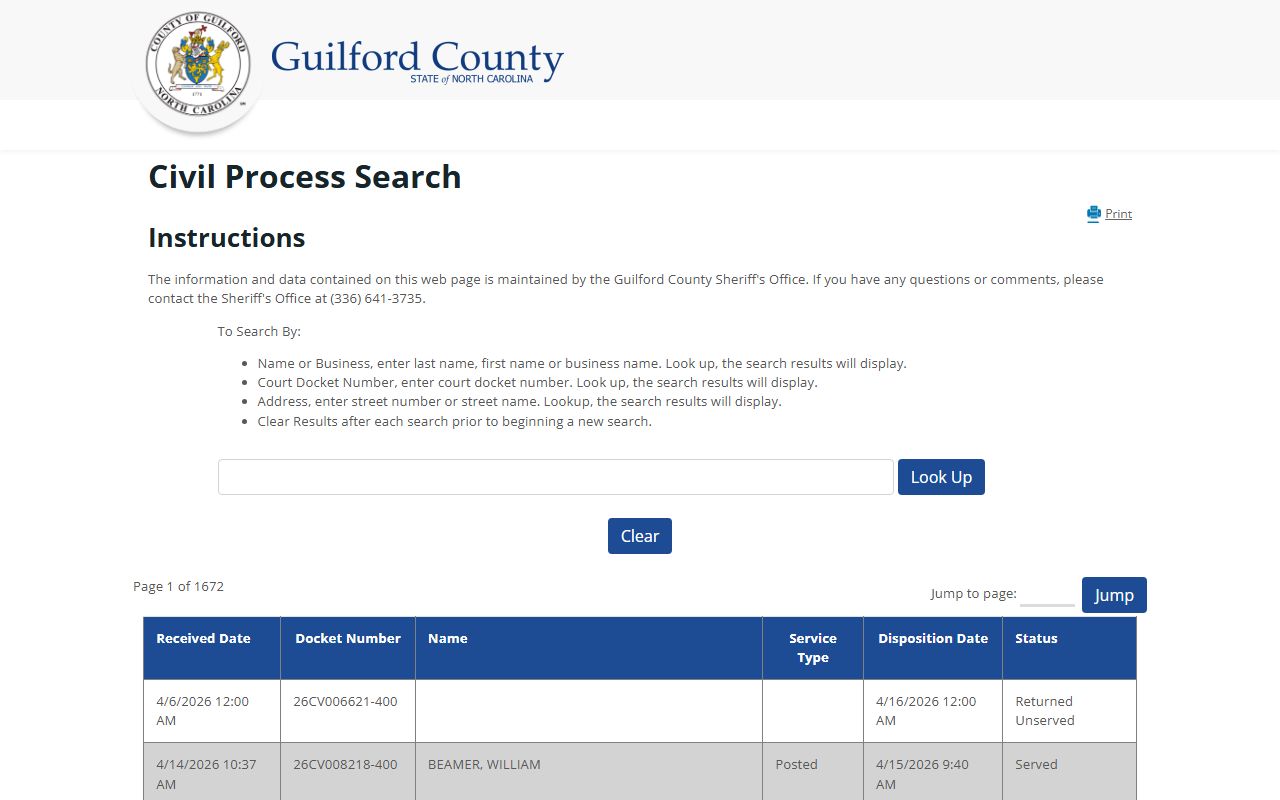
Keeping civil service records separate from criminal warrant records avoids a common search error.
Note: No official Guilford County Sheriff mobile app with warrant lookup was found in the research file.