
Guilford County Arrest Records and Court Charges
Guilford County arrest records start on the law enforcement side. They may show the person arrested, arrest date, booking agency, holding facility, bond information, court date, and charge text when those fields are public in the Sheriff's Police-to-Citizen system. The court charge record starts when the charge enters the North Carolina court system. That court record is maintained by the Clerk of Superior Court and can later show hearings, plea, disposition, sentence, fines, costs, and probation.
The two records should not be blended. The jail roster and recent arrest tools help identify current or recent custody and booking data. The formal criminal case file explains what was filed in court and how each charge moved. For custody details, use Guilford County inmate records. For the full case file and outcome after charges are filed, use Guilford County criminal court records. Court charges after arrest can change as the District Attorney reviews the case.
The official Guilford County Sheriff P2C recent arrests source is shown below.
That recent-arrests route is an arrest and booking access point, not a certified court disposition or proof of conviction.
Find Guilford County Arrest Records and Charges
Use the official channel that matches the question. For recent arrest and custody information, start with the Guilford County Sheriff's Police-to-Citizen portal. For court charge status and court events, use the North Carolina eCourts Portal Smart Search or the Clerk of Superior Court. For a certified single-county criminal search, use the clerk process rather than a screen print from P2C or Portal. If the record is a county agency record not shown online, Guilford County NextRequest may be the proper public-record route.
- Search the Sheriff's P2C recent arrests or inmate catalog for arrest and booking data.
- Search the North Carolina eCourts Portal by name or case number for filed court charges.
- Read each charge separately, including statute, status, hearings, and disposition if shown.
- Use the Clerk of Superior Court for certified criminal searches, paper files, and certified copies.
- Use Guilford County NextRequest for county agency records not available through court or P2C tools.
The Sheriff P2C inmate catalog is another official source for charge fields tied to custody.
Inmate charge fields can help connect an arrest to a court case, but the court record remains the source for final disposition.
Charges After Arrest in Guilford County
After an arrest, the legal path can include a warrant, citation, magistrate review, prosecutor review, indictment, hearing settings, and later disposition. North Carolina District Court magistrates issue arrest warrants, conduct initial appearances, and set bail. In Guilford County, the District Attorney for Prosecutorial District 24 prosecutes criminal cases filed in the district and prepares the criminal trial docket. The DA's review can affect which charges move forward, which are amended, and which are dismissed.
| Complaint or Citation | Information | Indictment | |
|---|---|---|---|
| Who Uses It | Officer, magistrate, or prosecutor process depending on case type. | Prosecutor-filed accusation where allowed. | Grand jury accusation, commonly tied to felony prosecution. |
| Common Role | Starts or supports an early criminal case, including misdemeanors and infractions. | Frames formal charges in court. | Moves felony accusations into Superior Court prosecution. |
| Record Impact | May appear with arrest, citation, warrant, or first appearance records. | May define filed charge counts. | May show charge counts that proceed in Superior Court. |
The official Prosecutorial District 24 District Attorney source appears in this image.
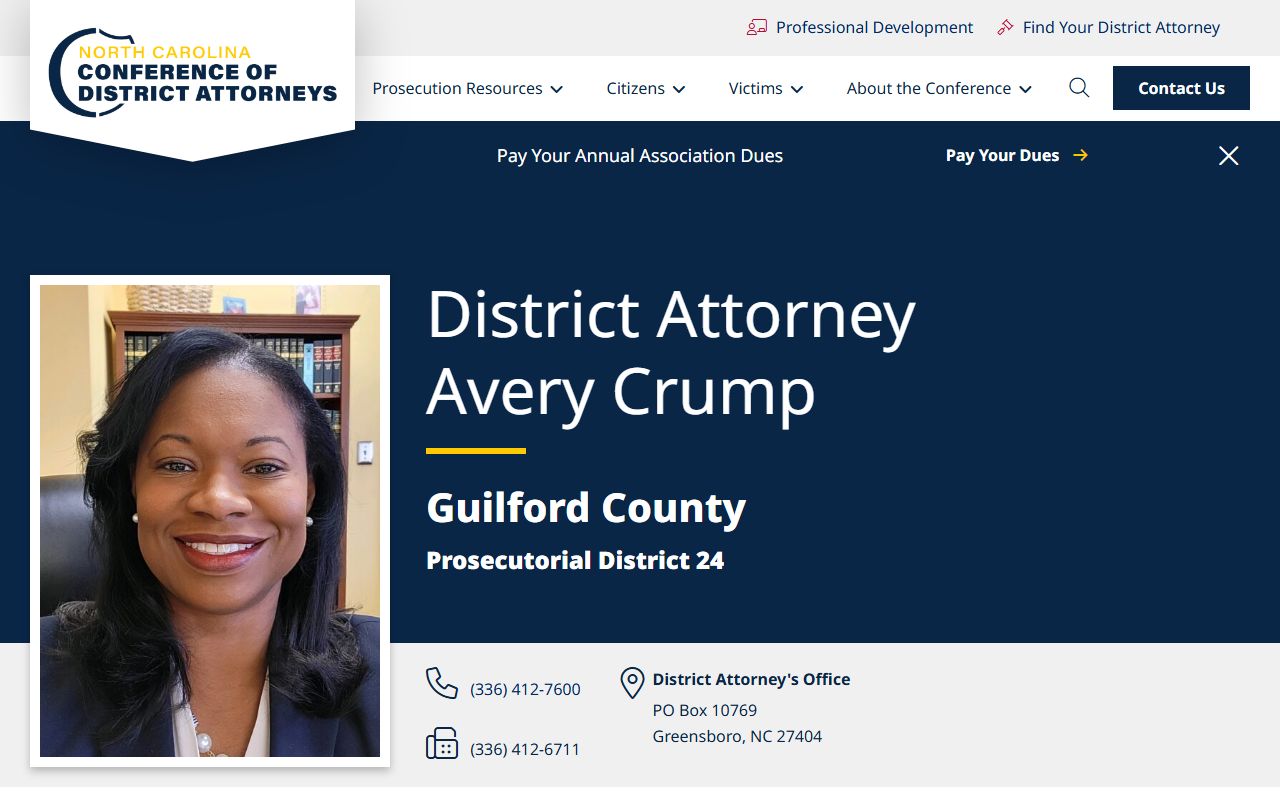
The District Attorney role matters because an arrest alone does not decide the final court charge, plea, dismissal, or sentence.
Guilford County Charge Status
Charge status can change as a case moves. One arrest can produce several charges, and each count can end differently. A pending charge may be amended, reduced, dismissed, or resolved by plea or trial. Some court records show charge codes or statute references. For criminal case numbers, North Carolina uses CR when the case includes at least one criminal offense and IF when the person was charged only with infractions.
| Status | What It Means |
|---|---|
| Pending | The charge has been filed or is active, but the court has not entered a final outcome for that charge. |
| Amended | The charge language, level, statute, or count has changed in the court record. |
| Reduced | The case resolved or moved forward on a lesser charge than the original accusation. |
| Dismissed | The charge was dropped by court action or prosecutor action and should not be read as a conviction. |
| Disposed | The court has recorded an outcome for that charge or case. |
Guilford County Charges vs Convictions
Arrest records and court charge records can show accusations that never become convictions. A charge is the allegation filed or tracked in the case. A conviction is the result of a guilty plea, guilty finding, or verdict of guilt. Public record users should check every charge's disposition before making any claim about outcome. This is especially important when several counts appear under one name or case number.
| Charge | Conviction | |
|---|---|---|
| Meaning | An accusation after arrest, citation, warrant, indictment, or prosecutor filing. | A final guilty result by plea or verdict. |
| Where It Appears | P2C, Portal, case summaries, court dockets, and paper files where public. | Court disposition and sentence entries. |
| How to Read | Look for status, amendment, dismissal, or pending settings. | Review sentence, probation, fines, costs, and appeal entries. |
What Guilford Arrest and Charge Records Show
The P2C structure captured in the research file confirms fields such as full name, first, middle, and last name, arrest date, release date or release time, court date, total bond amount, holding facility, primary charge, primary charge description, booking agency if configured, docket number, bond status, charge list, and inmate image endpoint. Indexed official snippets also showed charge table fields such as Name, Description, Status, Docket Number, Bond Type, Bond Status, and Bond Amount.
| Field | What It Shows |
|---|---|
| Arrest Date | The date tied to the arrest or booking record. |
| Holding Facility | Whether custody is connected to Greensboro or High Point detention operations when shown. |
| Primary Charge | The lead charge text or description configured in P2C. |
| Docket Number | The court number that can connect custody data to a case search. |
| Bond Status and Amount | Release condition information when public and configured. |
| Court Date | The next listed court setting, which should be confirmed in court hearing tools. |
DA and Magistrate Charge Roles
Guilford County magistrates and the District Attorney have different roles in the arrest-to-charges path. Magistrates issue arrest warrants, conduct initial appearances, set conditions of release, and handle certain minor matters as District Court officers. The District Attorney represents the State of North Carolina in criminal prosecutions, advises law enforcement, prepares the criminal trial docket, and handles criminal and some juvenile matters in Prosecutorial District 24.
District Attorney, Prosecutorial District 24
Greensboro contact
336-412-7600
High Point contact
336-822-6710
Magistrates
Greensboro Criminal/Warrants
336-412-7870
High Point Magistrates
336-822-6719
Public Access for Guilford County Arrest Records
Public access depends on whether the record is an arrest or booking record, a filed court record, an investigative record, or a restricted case. Filed court charges generally route through Portal, the Clerk of Superior Court, and public terminals when not sealed. County agency records can route to Guilford County NextRequest. Criminal investigation and intelligence records have special limits under G.S. 132-1.4, so a request for investigative material is not the same as a request for a filed court charge.
Juvenile records are restricted under Chapter 7B. Expunged records are confidential under G.S. 15A-151. The public may see that an arrest or charge once existed before an expunction only from older, nonofficial copies, but the clerk's official response must follow the expunction order and state law. Certified criminal record searches still come from the Clerk of Superior Court.
Note: A recent arrest listing is not a conviction, and charge status should be checked in court records.
Sealed vs Expunged Charge Records
Sealing and expunction both limit public access, but they are not the same. A sealed or restricted record may still exist in a court file with access limited by statute, order, or party status. An expunged record is treated as confidential under North Carolina law after the expunction process. That distinction is vital for arrest records and court charges after arrest because an arrest, charge, and conviction can have different public visibility over time.
| Sealed or Restricted | Expunged | |
|---|---|---|
| Public Access | Limited by case type, court order, or statute. | Removed from ordinary public access after expunction. |
| Examples | Juvenile records, sensitive filings, abuse or neglect matters, and sealed court orders. | Eligible arrest, charge, or conviction records covered by an expunction order. |
| Public Search Result | May show nothing or only a limited entry. | Should not reveal confidential expunged material in official clerk access. |
Important: Do not use arrest records or charge records from this private site for FCRA-regulated screening.