
Guilford District Court Overview
Guilford County is District Court District 24. The District Court Division is part of the North Carolina General Court of Justice, not a county-created local court. The official District Court page explains that District Court hears criminal, civil, family, juvenile, and magistrate matters. District Court criminal trials are non-jury, but misdemeanor convictions may be appealed to Superior Court for a new trial.
Guilford County District Court records are kept by the Clerk of Superior Court. Users can search public case information through the eCourts Portal, find hearings through Portal Search Hearings, use courthouse terminals, or inspect paper files at the Clerk when the file is public and available. Some District Court records, especially juvenile and abuse, neglect, or dependency files, are restricted by statute.
The North Carolina District Court source documents statewide jurisdiction used in Guilford County.
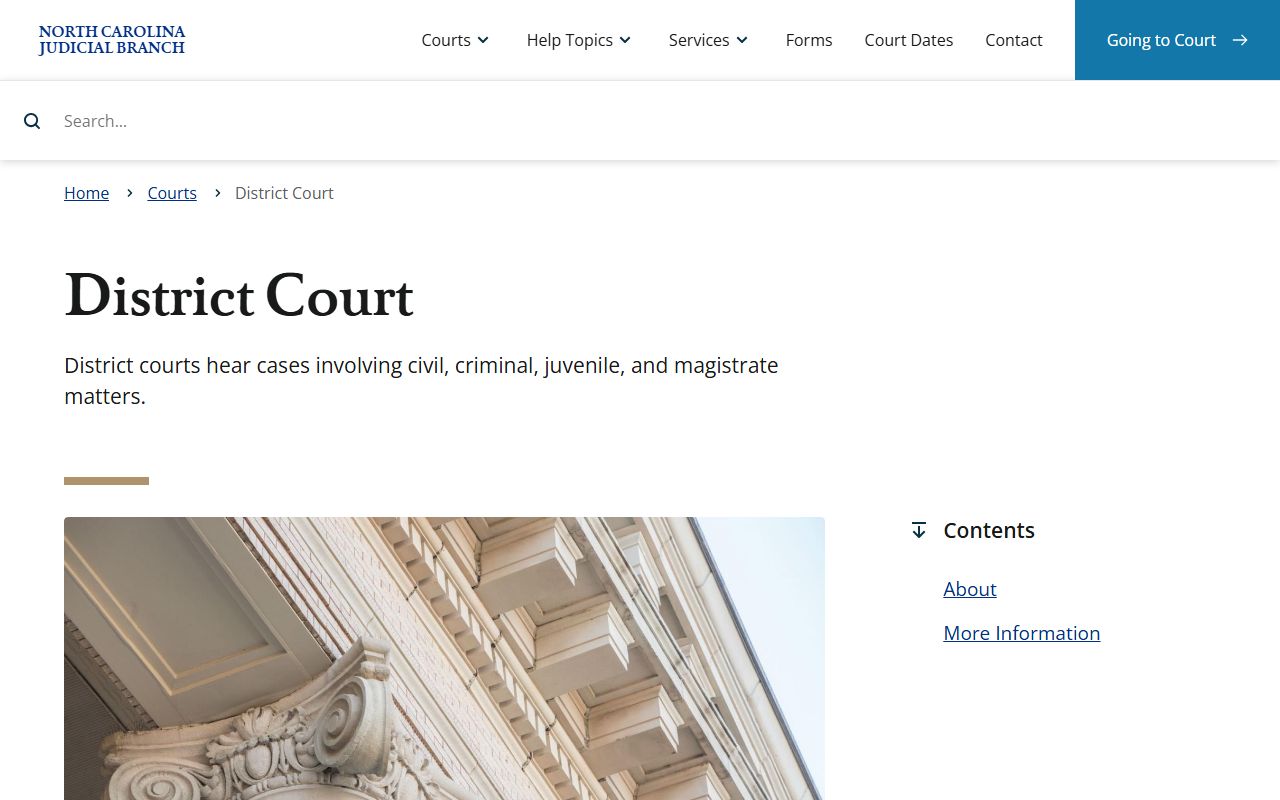
That jurisdiction is the reason Guilford County District Court handles more than traffic or misdemeanor matters.
Guilford District Court Contacts
Guilford County does not have a numbered set of separate county trial courts. Instead, District Court District 24 operates through the Judicial Branch at the Greensboro and High Point courthouse locations, with judges, magistrates, the Clerk, the District Attorney, and the Public Defender serving the district. The contact directory provides parallel contacts for Greensboro and High Point.
| Court or Office | Role | Guilford Contact |
|---|---|---|
| District Court Judges | Misdemeanors, infractions, family, juvenile, and civil matters. | Greensboro 336-412-7800; High Point 336-822-6712 |
| Clerk of Superior Court | District Court filings, records, payments, terminals, copies. | Greensboro 336-412-7300; High Point 336-822-6700 |
| Magistrates | Warrants, bond, small claims, evictions, civil marriages. | Greensboro criminal/warrants 336-412-7870; civil/small claims 336-412-7855; High Point 336-822-6719 |
| District Attorney | State prosecution in Prosecutorial District 24. | Greensboro 336-412-7600; High Point 336-822-6710 |
| Public Defender | Indigent defense for qualifying criminal and juvenile matters. | 336-412-7777 |
District Superior Magistrate Roles
North Carolina's local trial court structure differs from states that have county courts or justice courts. Guilford County District Court and Superior Court are state trial divisions. Magistrates are officers of District Court, not an independent justice court. A case may begin with a magistrate and then move into District Court or Superior Court depending on charge level, claim amount, or appeal route.
| District Court | Superior Court | Magistrates | |
|---|---|---|---|
| Civil Limit | Generally under $25,000 | Generally over $25,000 | Small claims of $10,000 or less |
| Criminal Jurisdiction | Misdemeanors and infractions | Felonies and District Court appeals | Warrants, initial appearances, bond |
| Family Cases | Divorce, custody, child support | Limited by case type or appeal posture | Civil marriages |
| Record Custodian | Clerk of Superior Court | Clerk of Superior Court | Clerk and magistrate-related court records |
Guilford District Case Flow
District Court case flow depends on the type of matter. A misdemeanor or infraction may begin with citation, warrant, summons, arrest, or magistrate action. The case may then move through first appearance, bond, court dates, plea, hearing, trial before a judge, disposition, sentence, costs, and possible appeal. A civil case starts with filing and service, followed by answer or response, hearing, trial, judgment, and enforcement or appeal.
Criminal and traffic flow: Citation or arrest › Magistrate or first appearance › District Court date › Plea or hearing › Disposition › Costs, sentence, or appeal.
Civil and family flow: Complaint or petition › Service › Response › Hearing or trial › Order or judgment › Compliance, enforcement, or appeal.
District Court Case Types
Guilford County District Court handles misdemeanors and infractions, including many traffic matters. A criminal case number with "CR" indicates at least one criminal offense, while "IF" indicates infraction-only. District Court also handles divorce, child custody, child support, and other family matters. Some records are public, but family files may contain protected information or sealed child-related material.
District Court civil jurisdiction covers cases involving less than $25,000. Magistrates hear small claims of $10,000 or less, summary ejectment actions, and personal property recovery matters. Juvenile matters are also in District Court, but public access is sharply limited by Chapter 7B.
District 24 Court Access
Guilford County is District Court District 24, Superior Court District 24, and Prosecutorial District 24. The Guilford County court contact directory is the local source for court offices, judges, magistrates, estates, juvenile court, Guardian ad Litem, and special proceedings contacts. Hearing dates can be searched through Portal Search Hearings by location, hearing type, search type, party name, case number, attorney, judicial officer, or courtroom.
Guilford public defense is also tied to District 24. NCIDS lists Guilford County in Defender District 24, with the Public Defender office phone at 336-412-7777.
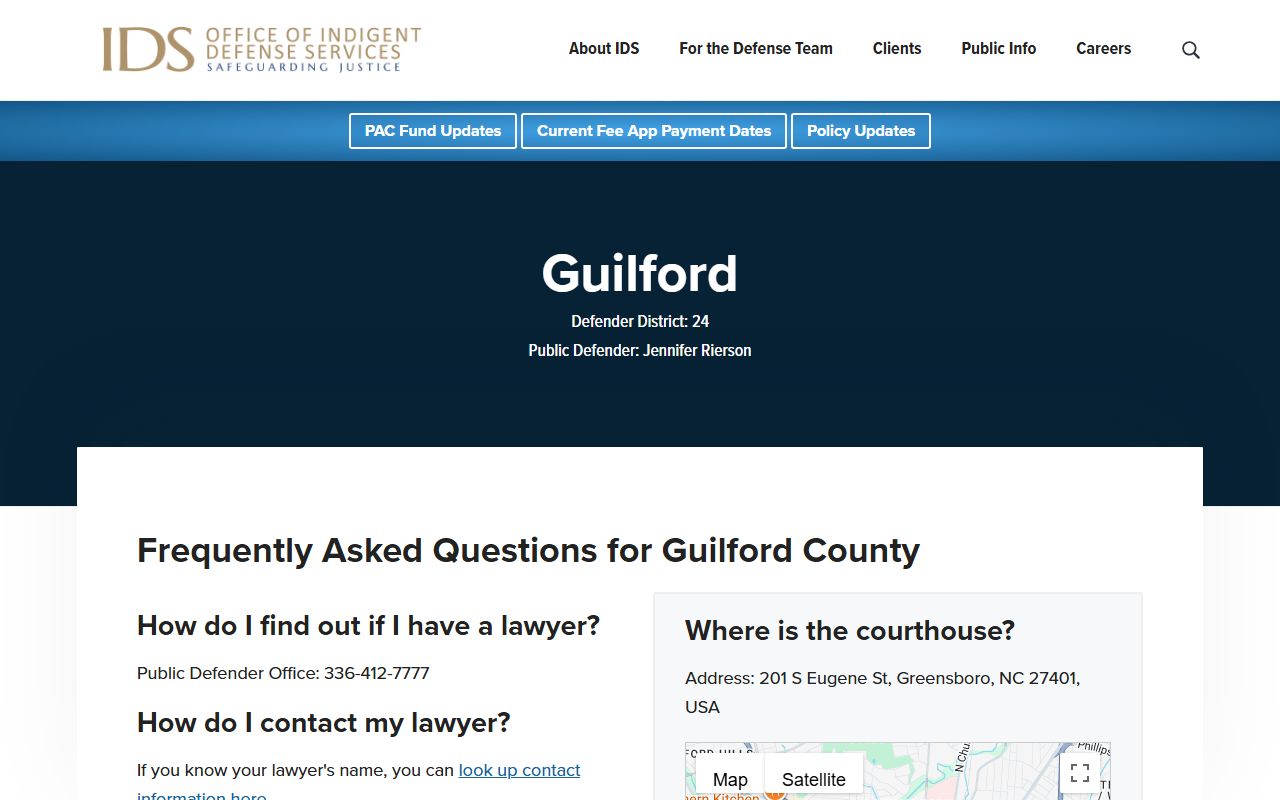
Public defender information is relevant to District Court because the court determines entitlement to counsel and indigency in qualifying matters.
The local Public Defender source adds Guilford County office context for representation in criminal and juvenile matters.
Those defense resources do not replace court records, but they help explain the participants shown in criminal and juvenile District Court files.
Guilford Magistrate Matters
Magistrates are District Court officers. In Guilford County, they issue arrest warrants, conduct initial appearances, set conditions of release, accept some waivers and guilty pleas in minor matters, hear small claims and evictions, determine some involuntary commitment matters, and perform civil marriages. The contact directory lists separate Greensboro criminal/warrant, Greensboro civil/small claims, and High Point magistrate phone lines.
Magistrate weddings are local and practical. Couples need the Register of Deeds marriage packet, $50 exact cash, and two witnesses with positive ID. Greensboro civil magistrate weddings are at 201 S. Eugene St., Suite 214. Greensboro criminal magistrate offices are at 201 S. Edgeworth St. High Point civil and criminal magistrate offices are at 505 E. Green Drive.
District Juvenile Restrictions
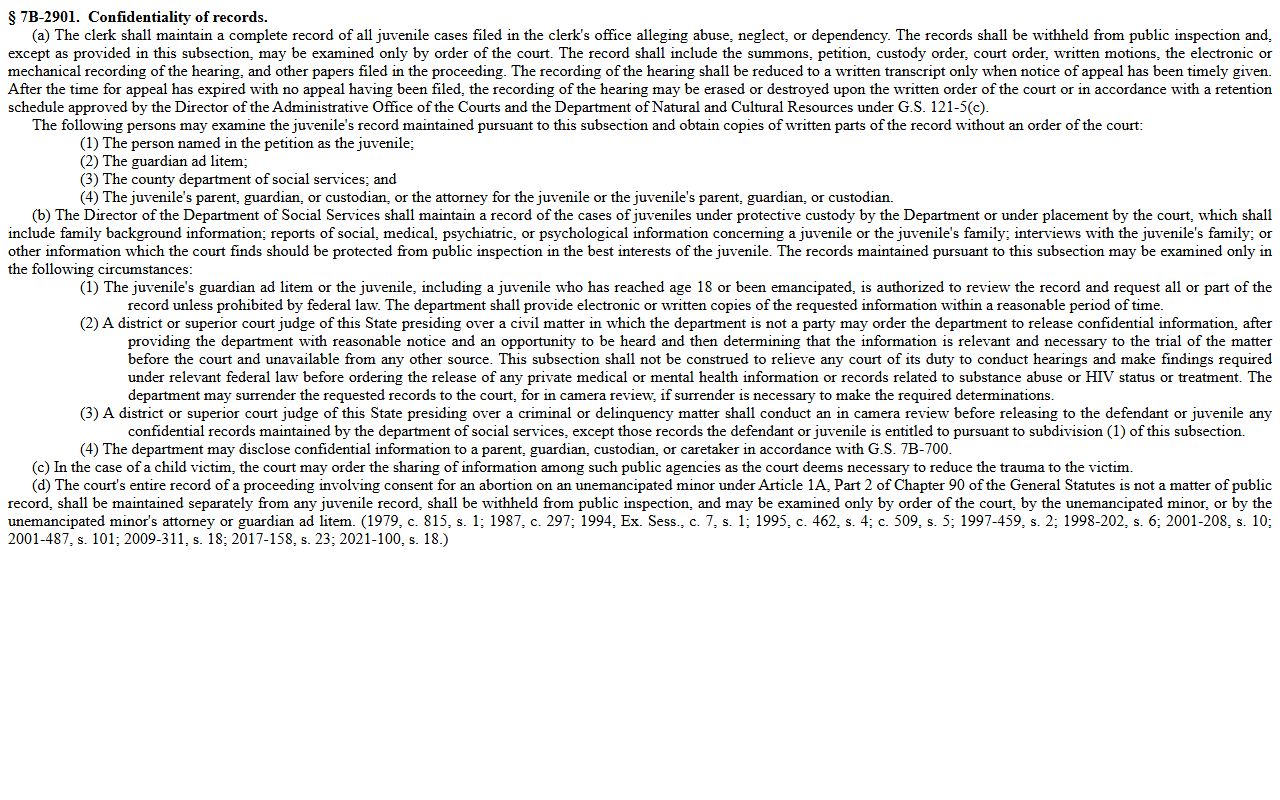
Juvenile records are an important limit on Guilford County District Court access. Juvenile delinquency and undisciplined records are restricted under G.S. 7B-3000. Abuse, neglect, and dependency records are withheld from public inspection under G.S. 7B-2901, except as allowed by statute or court order.
The juvenile record statute is one of the sources assigned to Guilford County District Court.
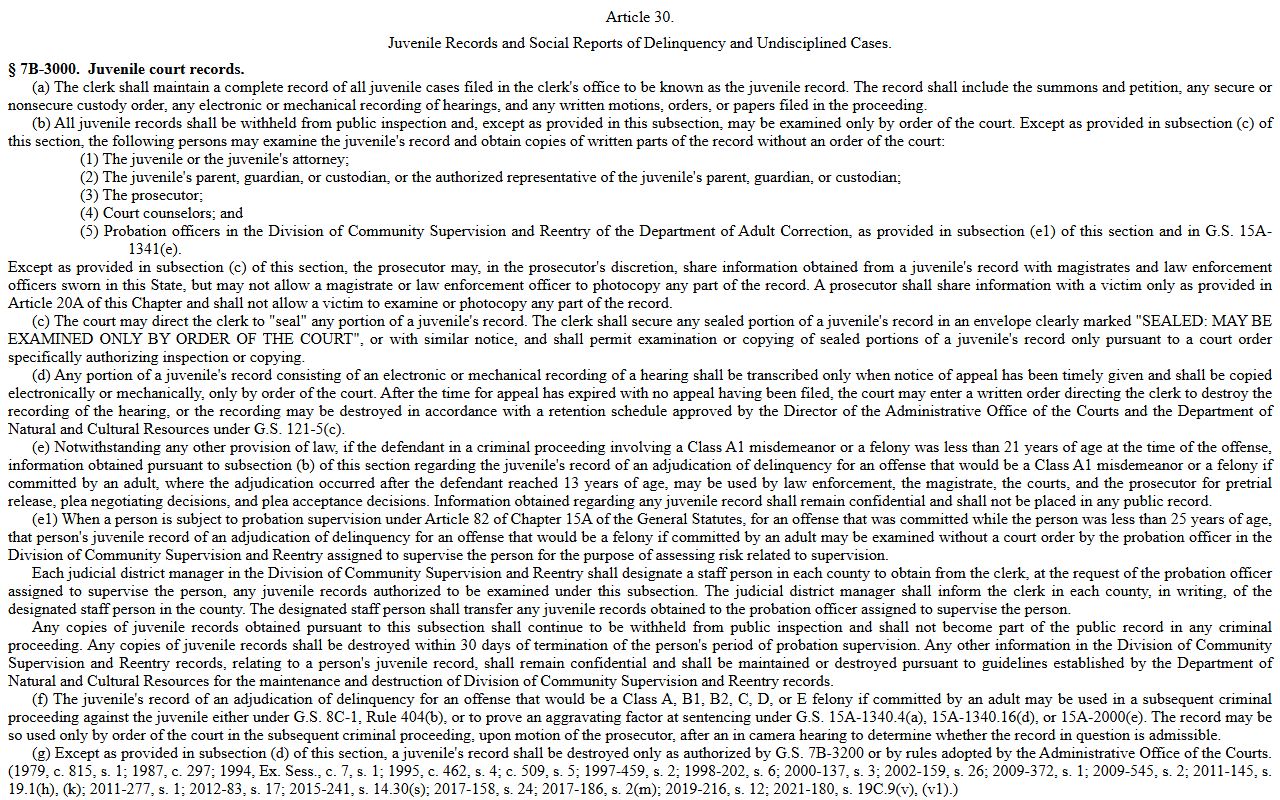
Public case search should not be expected to show sealed or restricted juvenile District Court material.
The abuse, neglect, and dependency statute is also a District Court access limit in Guilford County.
These restrictions protect sensitive child welfare records even when other District Court records are public.