
Search Guilford County Court Records
The main online starting point for Guilford County Court records is the North Carolina eCourts Portal. Guilford County does not run a separate county-built public case search for Superior Court or District Court files. The statewide portal includes Smart Search for public case information, Search Hearings for court dates, Make Payments for eligible matters, and NC Judgment Search for judgment index entries.
The portal supports anonymous public use, but JavaScript and cookies must be enabled. A CAPTCHA appears about every ten minutes, and registration does not unlock restricted case types. For background checks, certified court searches, or copies that need an official seal, the North Carolina Judicial Branch directs users to the Clerk of Superior Court in the county where the case is located.
- Open the eCourts Portal and choose Smart Search for public case information.
- Enter a case number or a party name in last, first format.
- Use Advanced Filtering Options to narrow the location to Guilford County when needed.
- Review case events, hearing entries, parties, disposition, and financial information if the record is public.
- Contact the Clerk of Superior Court for paper files, certified copies, or a certified criminal record search.
| Smart Search Field | How It Helps | Format Note |
|---|---|---|
| Record Number or Name | Searches by case number or party name. | Case-number wildcard needs at least four characters. |
| Last Name and First Name | Finds person-based case records. | Person-name wildcard uses at least three last-name letters and one first-name letter plus an asterisk. |
| Filter by Location | Limits results to Guilford County or another North Carolina county. | All Locations is also available. |
| Case Type or Status | Narrows a broad search when options are visible. | Dropdown option lists may not fully expose in static text. |
The official Smart Search page is shown in the screenshot below from the portal source used for Guilford County Court records access.
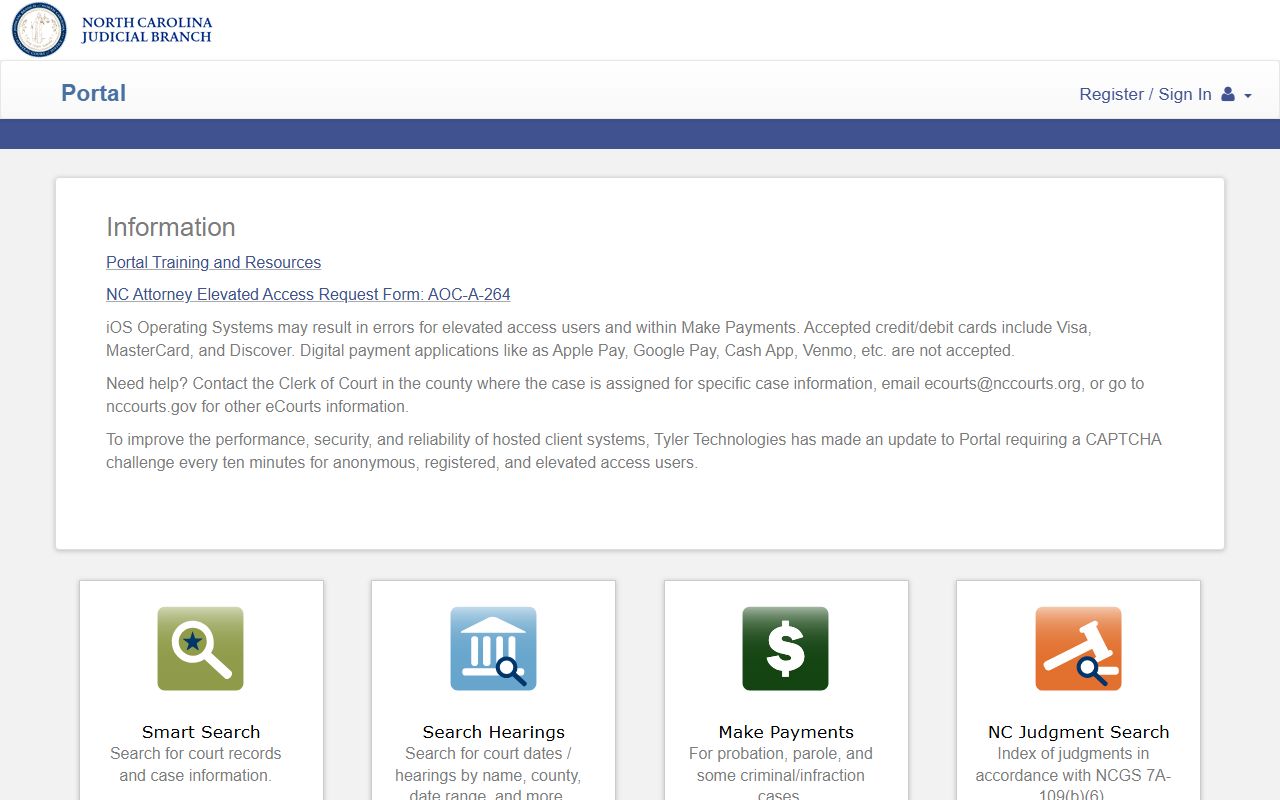
The portal view matters because Guilford County record searches depend on statewide eCourts tools rather than a locally hosted county case database.
Guilford County Court System
North Carolina uses a unified General Court of Justice. Guilford County cases are in Prosecutorial District 24, Superior Court District 24, and District Court District 24. The Appellate Division sits above the trial divisions. The Superior Court Division and District Court Division are the trial courts that generate most Guilford County Court records searched by the public.
Superior Court handles felony criminal cases, civil cases involving more than $25,000, and misdemeanor or infraction appeals from District Court. District Court handles misdemeanors, infractions, divorce, custody, child support, juvenile matters, civil cases under $25,000, and magistrate matters. Magistrates are District Court officers. They issue warrants, set bond, conduct initial appearances, hear small claims and evictions, and perform civil marriages.
Case flow: Magistrate matter or filing › District Court or Superior Court › North Carolina Court of Appeals › Supreme Court of North Carolina.
| Court or Office | Role in Guilford County | Common Records |
|---|---|---|
| Superior Court | Felonies, civil over $25,000, appeals from District Court. | Felony files, civil judgments, appeal records. |
| District Court | Misdemeanors, infractions, family, juvenile, civil under $25,000. | Traffic, custody, divorce, small civil, misdemeanor files. |
| Magistrates | Warrants, bond, small claims, evictions, civil marriages. | Warrant, initial appearance, small claims, summary ejectment records. |
| Clerk of Superior Court | Unified trial-court clerk and probate judge. | Court files, estates, special proceedings, payments, certified searches. |
The North Carolina court structure overview provides the statewide hierarchy used by Guilford County courts.
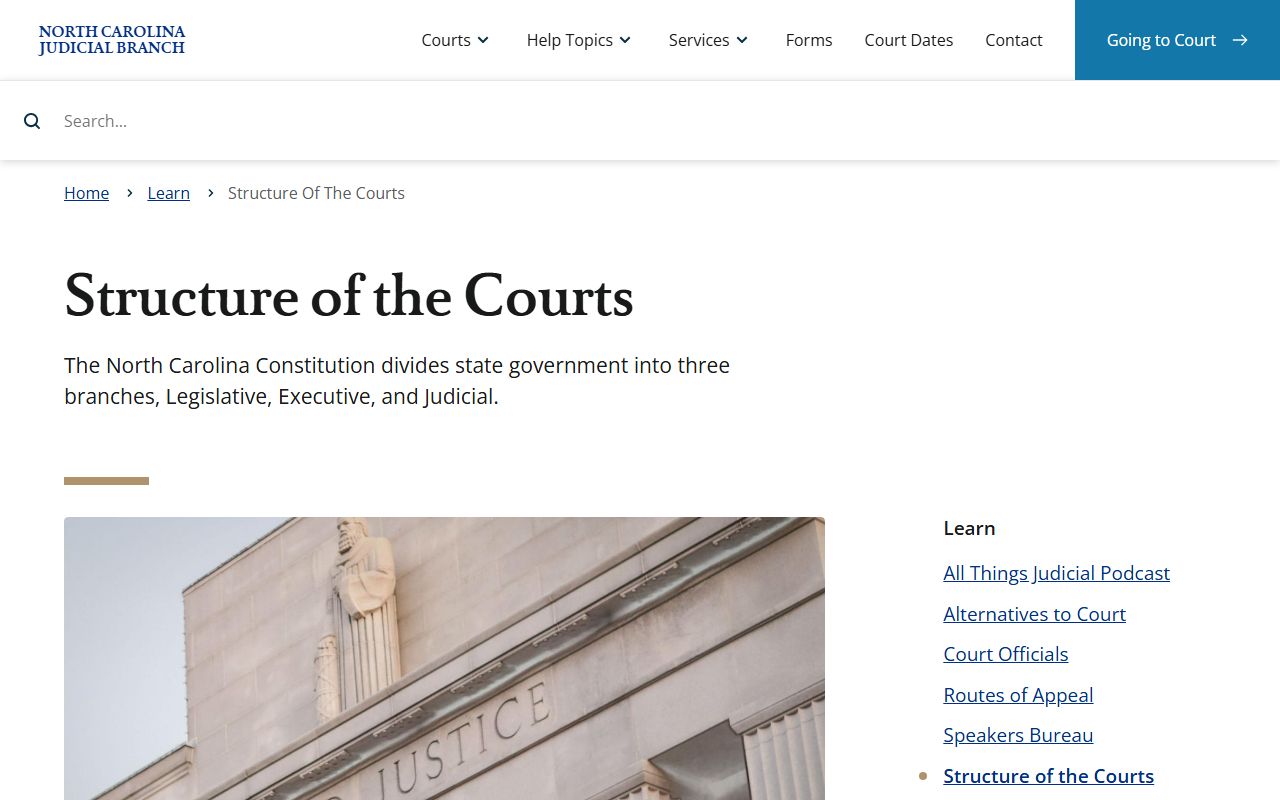
This statewide structure explains why Guilford County courthouse counters and the eCourts Portal use North Carolina Judicial Branch systems.
Guilford County Courthouses
Guilford County has two primary state courthouse locations: Greensboro and High Point. Both serve the same unified court system and the same Clerk of Superior Court structure. Clerk offices at both locations are open Monday through Friday from 8:30 a.m. to 12:45 p.m. and 1:45 p.m. to 5:00 p.m. Secure clerk drop boxes are available outside each courthouse at all hours.
The Judicial Branch Guilford County landing page links court dates, forms, services, local rules, contact directories, payment information, and courthouse pages.
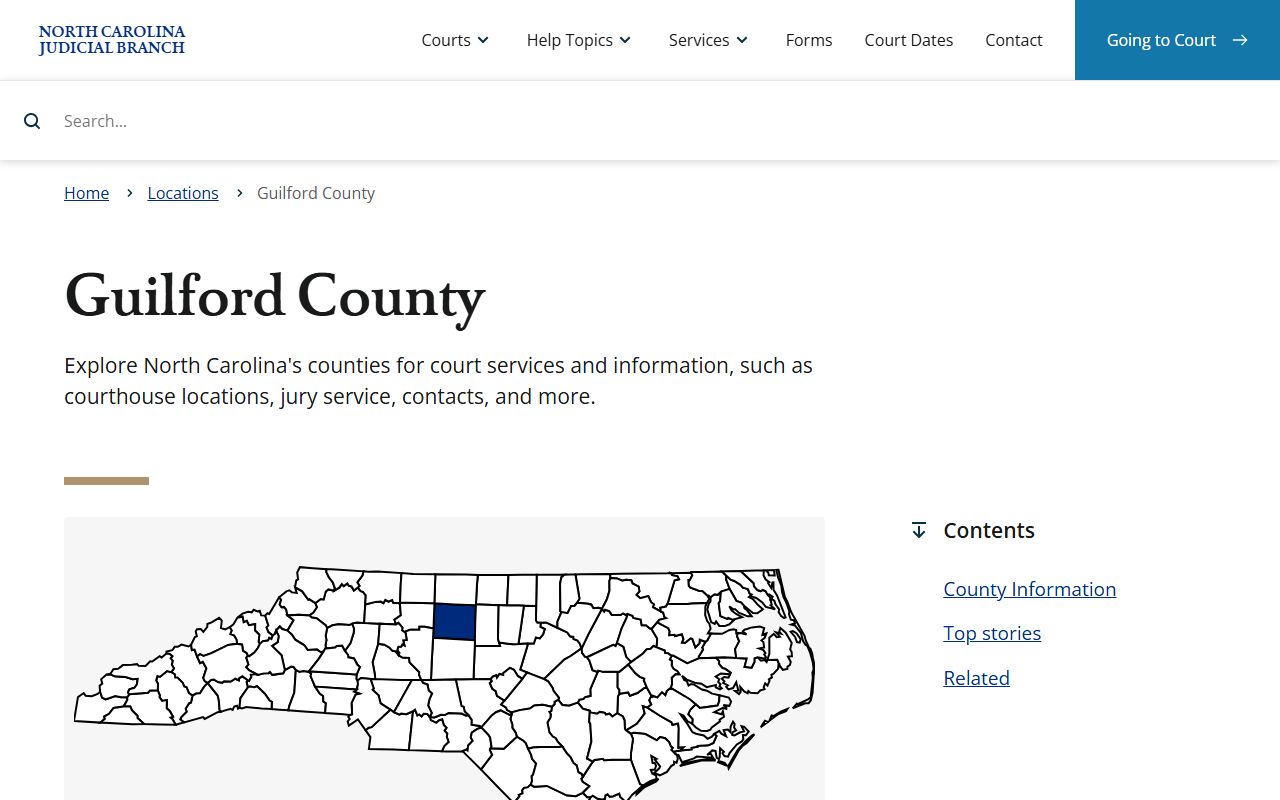
The landing page is the best official directory before choosing between the Greensboro courthouse, High Point courthouse, court calendar tools, or Clerk services.
The Guilford County court contact directory lists Clerk, judge, magistrate, juvenile, estates, and special proceedings contacts.
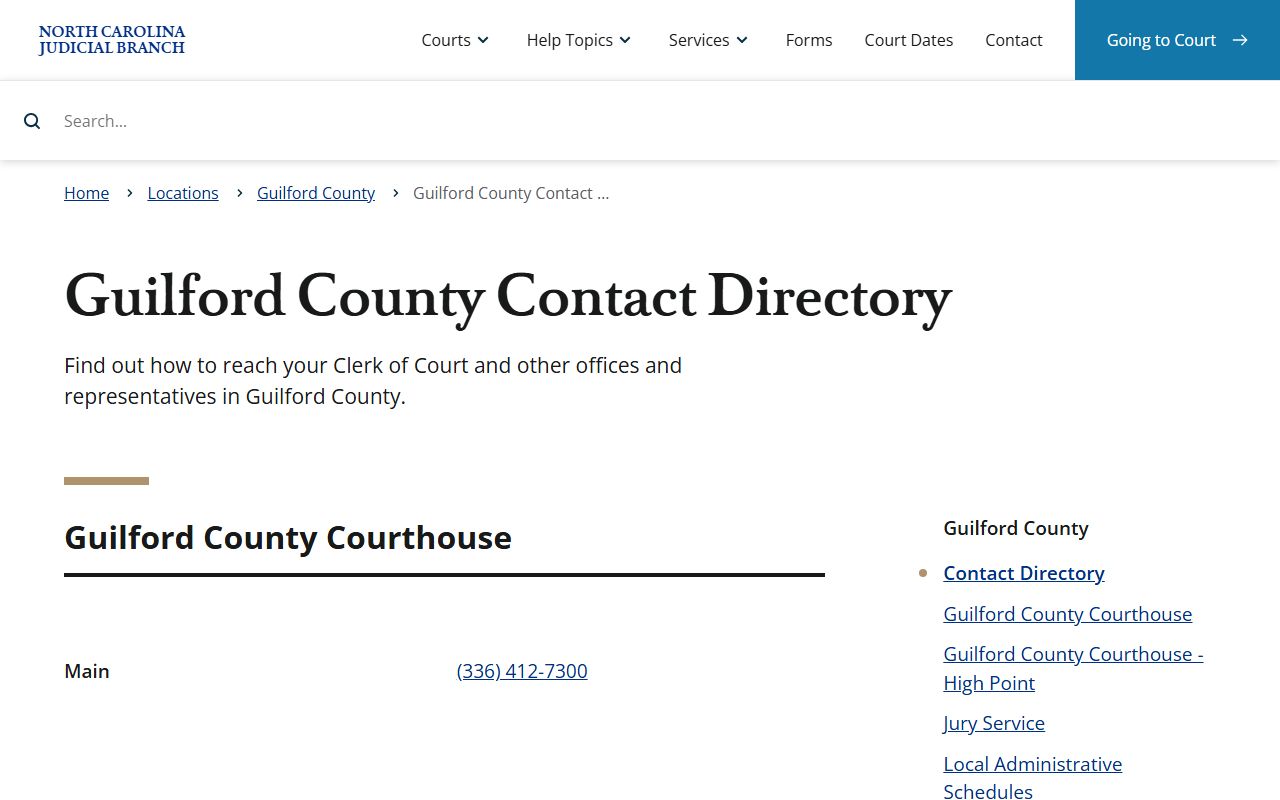
That directory is the best source when a record question depends on the exact court division or counter, not just the courthouse address.
Guilford County Courthouse - High Point
505 East Green Drive
High Point, NC 27262
336-822-6700
The Greensboro courthouse page confirms the main state courthouse address, phone, accessibility, parking, and clerk hours.
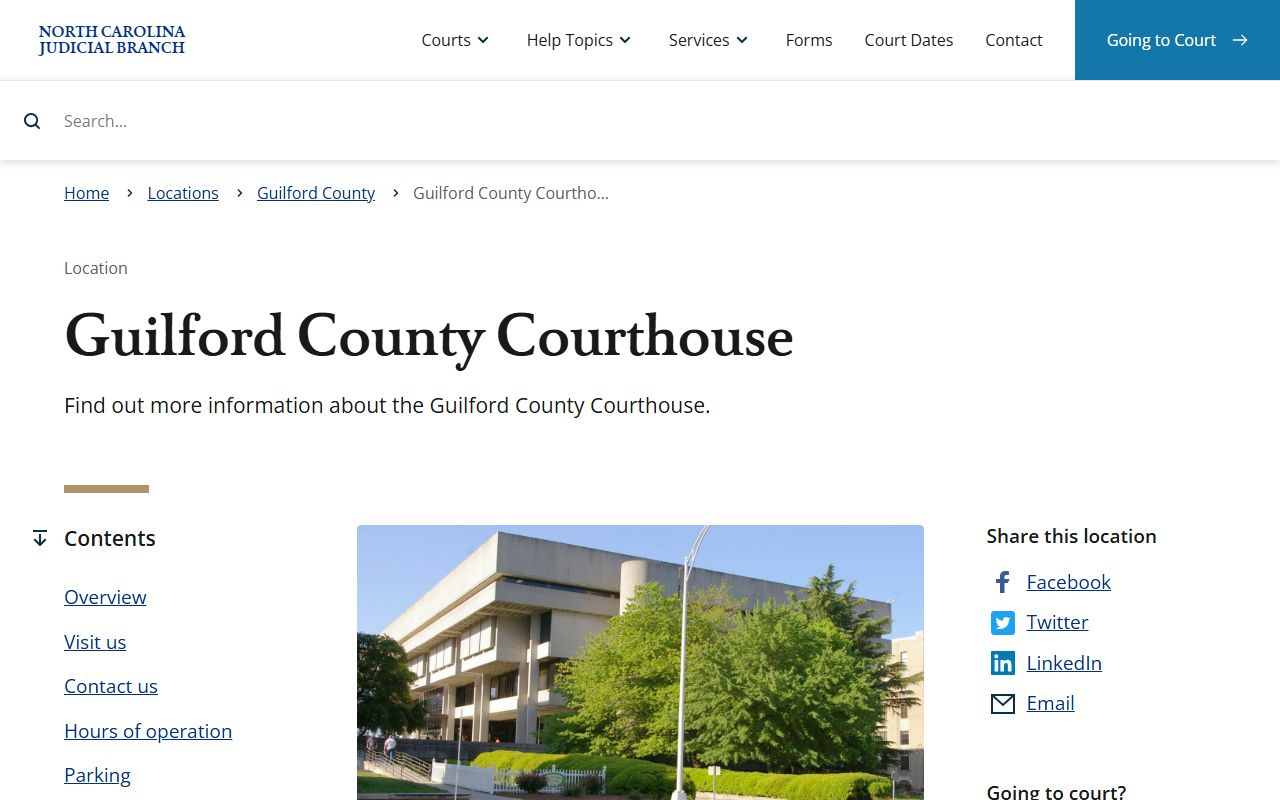
Greensboro is the primary courthouse city, but the High Point courthouse is a full state courthouse access point for many users.
The High Point courthouse page gives the second official courthouse location.
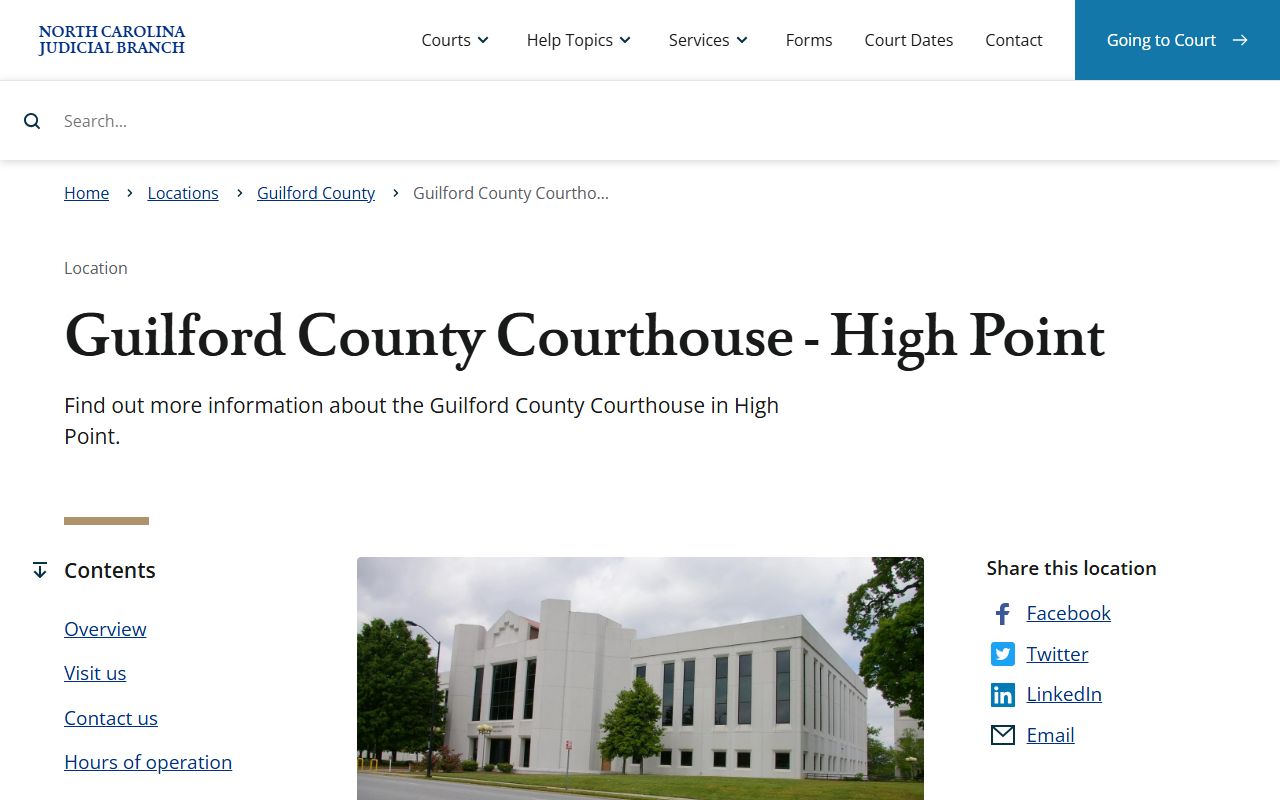
The two-city courthouse setup affects where users file papers, attend hearings, ask for clerk help, or use magistrate services.
Guilford County Court Record Types
Guilford County Court records include civil, criminal, traffic, family, estate, special proceeding, and judgment records. Civil records cover disputes such as contracts, torts, property claims, domestic matters, small claims, evictions, and judgments. Criminal court records may include charges, warrants or citations, hearings, pleas, motions, dispositions, judgments, fines, costs, probation, and appeals.
Family records may include divorce, custody, support, alimony, equitable distribution, domestic violence protective orders, and juvenile matters. Probate records are handled by the Clerk of Superior Court because the Clerk acts as probate judge for estates in North Carolina. Sheriff arrest and jail records are related to criminal cases, but they are not the same as the filed court case.
- Criminal court records track the filed case after charges reach court.
- Arrest records and charges connect booking data, prosecutor review, and charges after arrest.
- Traffic records show citation, waiver, court date, disposition, and payment status when public.
- Marriage and divorce records are split between the Register of Deeds, Clerk, and NC Vital Records.
- Probate records cover estates, wills after death, fiduciary letters, guardianships, and special proceedings.
What Guilford Court Records Show
North Carolina case numbers help identify record type. Criminal case numbers begin with the last two digits of the year charged. The next two characters can show whether the case includes a criminal offense or only infractions. "CR" means at least one criminal offense. "IF" means an infraction-only matter. A person may have both criminal and infraction charges in one case or multiple related case numbers.
| Field | What It Shows |
|---|---|
| Case Number | Year and case-type code used to identify the court file. |
| Parties | Defendant, plaintiff, petitioner, respondent, attorneys, or fiduciaries. |
| Charges or Cause | Criminal charge, traffic offense, civil claim, estate matter, or family case issue. |
| Events and Hearings | Filings, motions, notices, court dates, continuances, and hearing results. |
| Disposition | Outcome of a charge, claim, or case when public. |
| Financial Information | Fines, costs, judgments, restitution, fees, and payment status when available. |
Guilford Court Access Laws
Guilford County Court records are governed most directly by North Carolina court-record law. County agency and sheriff records also fall under the North Carolina Public Records Act unless an exception applies. A filed court case should start with Portal, the Clerk, or courthouse terminals. A county agency record should go to the department or Guilford County NextRequest.
Key statutes:
G.S. 7A-109 says clerk-maintained court records, dockets, files, and indexes are open to public inspection unless law provides otherwise.
G.S. 132-1 broadly defines public records for North Carolina state and local agencies.
G.S. 132-6 requires inspection and copies as promptly as possible when lawful fees are paid.
G.S. 132-1.4 places special limits on criminal investigation and intelligence records.
Restricted Guilford Court Records
Some Guilford County Court records are not open for ordinary public inspection. Juvenile delinquency and undisciplined records are restricted under G.S. 7B-3000. Abuse, neglect, and dependency records are restricted under G.S. 7B-2901. Adoption records are sealed, mental-health commitment records are confidential, and expunged records are confidential under G.S. 15A-151.
Portal registration does not make restricted records public. Users who believe they are entitled to a restricted file need statutory authority, party status, attorney access, agency authority, or a court order. The correct next step is usually the Clerk of Superior Court or legal counsel, not a broader web search.
Guilford Sheriff and Jail
The Guilford County Sheriff's Office is led by Sheriff Danny H. Rogers. The Sheriff's Office provides detention, inmate search, recent arrests, warrant, legal process, civil process, mail, visitation, account, and contact resources. The office headquarters contact page lists 401 W. Sycamore St., Greensboro, main phone 336-641-3694, non-emergency phone 336-373-2222, and sheriff@guilfordcountync.gov.
Guilford County operates detention centers in Greensboro and High Point. Current jail custody is searched through the official Police-to-Citizen system, while filed criminal court outcomes are searched through Portal or the Clerk. No official Guilford County sheriff app with jail, warrant, or records lookup functions was documented in the research, so app-only lookup should not be assumed.
The county courthouse security and parking page adds practical courthouse access rules for record users who must visit in person.
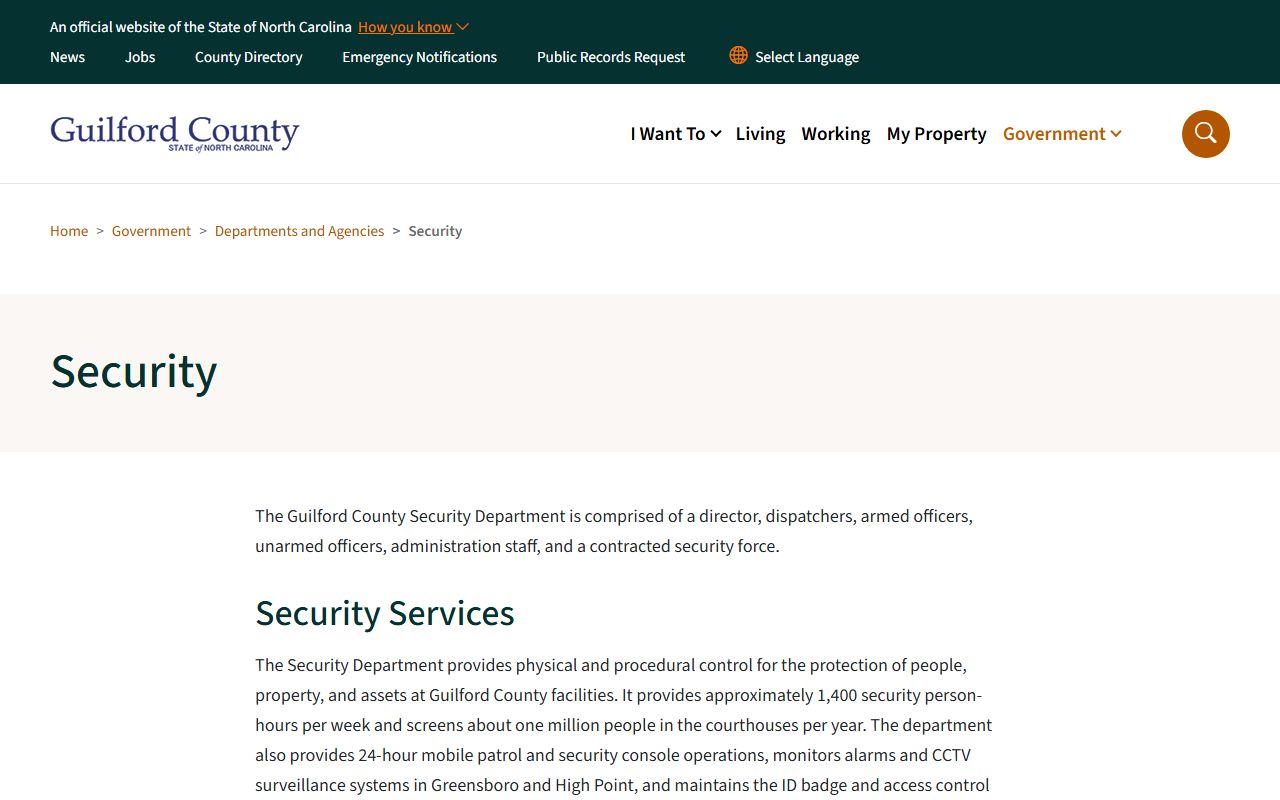
Security and parking details are useful when a Guilford County Court record requires a clerk counter visit, a public terminal search, or an in-person payment.
Marriage Divorce and Probate
Marriage licenses and certified Guilford marriage-license copies are handled by the Guilford County Register of Deeds, not the court clerk. Divorce judgments and divorce files are handled by the Clerk of Superior Court in the county where the divorce was granted. NC Vital Records holds statewide marriage certificates from 1962 forward and divorce certificates from 1958 forward.
Probate records are handled by the Clerk of Superior Court / Estates Division because North Carolina clerks act as probate judges. Estate files can include wills filed after death, letters, inventories, accountings, bonds, caveats, guardianship files, and special proceeding orders. Marriage, divorce, and estate records have different offices, fees, and copy rules, so the record type should be identified before visiting a counter.
Guilford Court Records Fees
Fees vary by record and service. The research confirms a $25 certified single-county criminal record search through the Clerk, a $225 ordinary absolute divorce filing cost, a $30 sheriff civil process service fee, a $120 estate administration filing fee, and a $120 guardianship or non-foreclosure special proceeding fee. Ordinary court-copy fees were not confirmed in the official sources reviewed.
| Item | Amount or Rule |
|---|---|
| Certified single-county criminal search | $25 |
| Self-service criminal terminal search | No charge to search, view, or email; printing may cost |
| Divorce filing | $225 ordinary absolute divorce filing |
| Sheriff civil process service | $30 per item |
| Estate administration filing | $120 plus applicable gross-estate fee |
| County public records copy | NextRequest FAQ lists 15 cents per page unless a statutory fee applies |
Guilford eCourts Updates
North Carolina eCourts is now a statewide system across all 100 counties. In June 2025, the Judicial Branch announced eCourts kiosks for Guilford and other counties. Those kiosks support court-date and case-event searches, eFiling, payments, scanner services, and printer access for people who need courthouse-based technology.
The eCourts kiosk announcement identifies Guilford County as a deployment location.
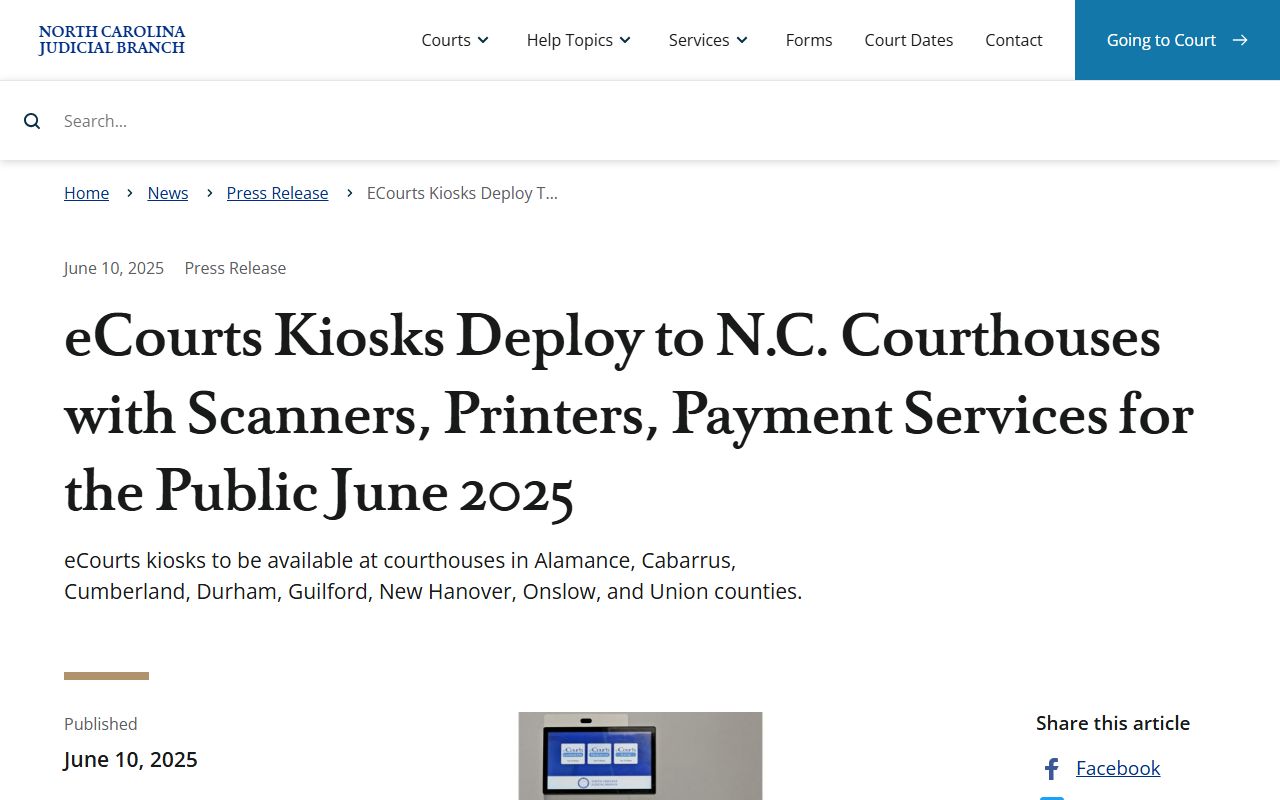
The kiosk rollout creates an in-person digital channel alongside home portal searches and Clerk counter service.
Read Guilford Case Records
Common terms have specific meanings in a Guilford County Court record. A plaintiff files a civil lawsuit. A defendant is sued or charged. A petitioner asks the court for relief, while a respondent answers a petition. A motion asks for an order. A disposition is the outcome of a charge or case. A judgment is a final or enforceable court decision.
- Docket
- A chronological list of filings, hearings, and case events.
- Indictment
- A formal felony charging document from a grand jury.
- Conviction
- A finding or plea of guilt, distinct from a pending charge.
- Expunction
- A legal process that removes and seals eligible records.
Guilford Courthouse History
Guilford County was formed in 1771 from parts of Rowan and Orange counties. Greensboro became the county seat in 1808. The phrase "Guilford Courthouse" also refers to the Revolutionary War battlefield where the Battle of Guilford Courthouse occurred on March 15, 1781. That history can confuse searches because modern users may mean the current state courthouse, the Old Guilford County Courthouse, the federal courthouse, or the national military park.
The Governmental Plaza access page explains the downtown civic campus around the current courthouse, Old Courthouse, and municipal offices.
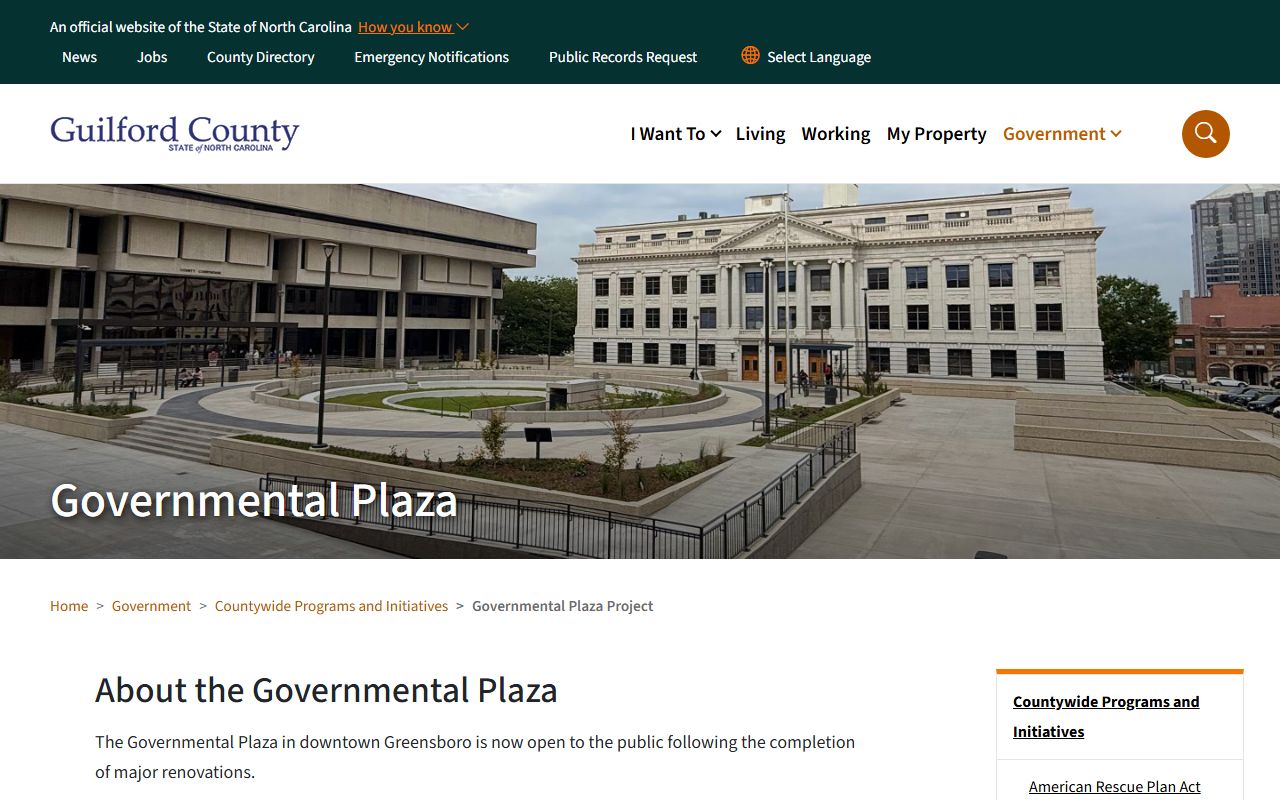
For record access, the practical point is simple: state court files are not held at every building with "courthouse" in its name.
Guilford Court Records FAQ
Can I search Guilford County Court records online?
Yes. Public case information is searched through the North Carolina eCourts Portal. Use Smart Search for case records and Search Hearings for dates. Some paper files, certified copies, and restricted matters require the Clerk.
Who keeps Guilford County court files?
The Clerk of Superior Court is the unified clerk for Superior Court and District Court records in Guilford County. The Clerk also acts as probate judge for estates and special proceedings.
Are sheriff records the same as court records?
No. Sheriff records may show custody, arrests, warrants, and civil process service. Filed case outcomes, pleas, dispositions, and judgments come from the court record.
Where are divorce records?
Divorce judgments and court files are with the Clerk in the county where the divorce was granted. Divorce certificates for 1958 forward may also be ordered from NC Vital Records.